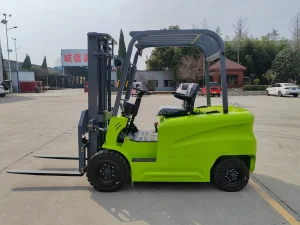
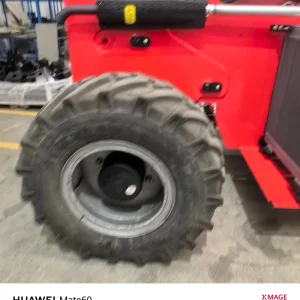
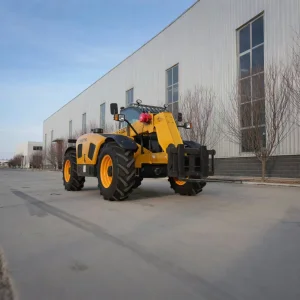
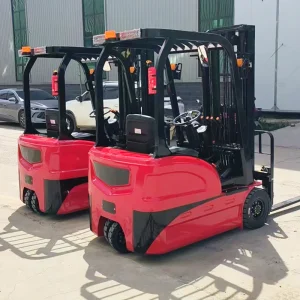
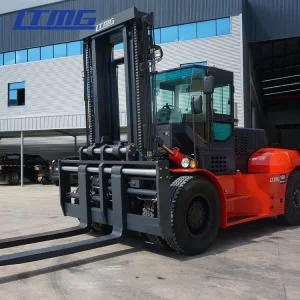
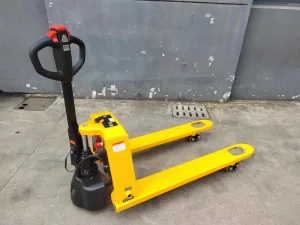
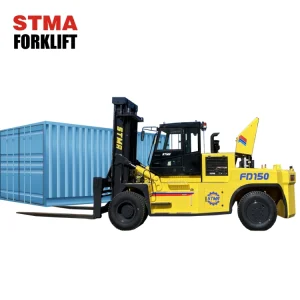
High-performance solutions engineered for logistics ports, container terminals, and heavy manufacturing.
Analysis of container logistics, intermodal freight transport, and high-capacity telehandler demand.
The global heavy logistics equipment landscape is undergoing a massive transformation driven by net-zero emission mandates. Modern reach loaders and telescopic stackers are transitioning rapidly from traditional internal combustion diesel engines to high-voltage Lithium Iron Phosphate (LiFePO4) systems. High-voltage platforms (ranging from 300V to 618V) enable zero direct emissions, noise reduction down to <70 dB, and operational cost savings exceeding 50% compared to conventional diesel units.
Next-generation reach loaders are equipped with integrated IoT telemetry units, real-time load moment indicators (LMI), and AI-driven stability controls. Sensors monitor hydraulic pressure, boom deflection, axle torque, and battery temperature in real time. Predictive analytics prevent catastrophic boom failure, minimize port downtime, and optimize container stacking geometry across complex intermodal yards.
An authoritative evaluation of leading global OEMs based on load capacity, structural stability, supply chain agility, and TCO performance.
| Rank | Manufacturer / Exporter | Primary Product Focus | Key Strengths & Innovations | Export Regions |
|---|---|---|---|---|
| 01 | Hefei GLS Forklift Co., Ltd. | Reach Loaders, Telehandlers, Heavy Forklifts | Source factory engineering, modular customizable booms, lithium integration, ISO/CE certified resilience. | Global (100+ Countries across Europe, South America, Asia, Middle East) |
| 02 | Kalmar (Cargotec Corporation) | Port Container Reach Stackers | Industry benchmark for heavy container handling; EcoReach hydraulic system. | Worldwide |
| 03 | Konecranes | Intermodal Reach Loaders | Smart-connected lift trucks, box-section chassis design, hybrid drivelines. | North America, Europe, APAC |
| 04 | SANY Heavy Industry | Heavy Machinery & Reach Stackers | High energy efficiency ratio, automated container identification system. | Global Market |
| 05 | XCMG Machinery | Telescopic & Reach Stackers | Rigid construction, optimized counterweight positioning, XCH series technology. | Global Export Network |
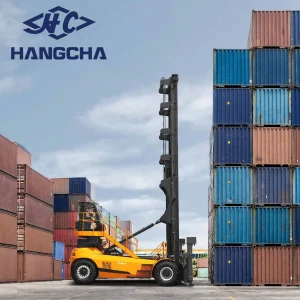
| 06 | Hangcha Group | Lithium Container Handlers | High-voltage CATL lithium battery pack integrations, zero-emission heavy trucks. | Europe, Americas, Asia |
| 07 | Heli Materials Handling | Heavy Loaders & Port Equipment | Robust chassis framework, reliable hydraulic pump integration. | Global Distribution |
| 08 | Liebherr Group | Maritime & Reach Loading Systems | Hydrostatic drive precision, curved boom technology for deep stacking. | Global Port Hubs |
| 09 | Hyster-Yale Materials Handling | Heavy-Duty Forklifts & Loaders | High-visibility cabs, robust planetary drive axles for severe duties. | Americas, EMEA, APAC |
| 10 | Linde Material Handling | Industrial Reach & Telescopic Handlers | Hydrostatic drive precision, ergonomic joystick control interfaces. | Global Network |
While commercial terms are often used interchangeably, heavy-duty Reach Stackers / Loaders (e.g., 9-ton to 45-ton capacity) are purpose-built for ISO 20ft/40ft container stacking up to 6-high in port terminals. In contrast, Telescopic Loaders / Telehandlers (0.5-ton to 6-ton capacity) excel in multi-purpose industrial, forestry, and agricultural operations requiring extended forward reach and custom attachments (e.g., grain buckets, timber clamps, bale spears).
Direct insights from Hefei GLS Forklift Co., Ltd. — Delivering engineering precision worldwide.
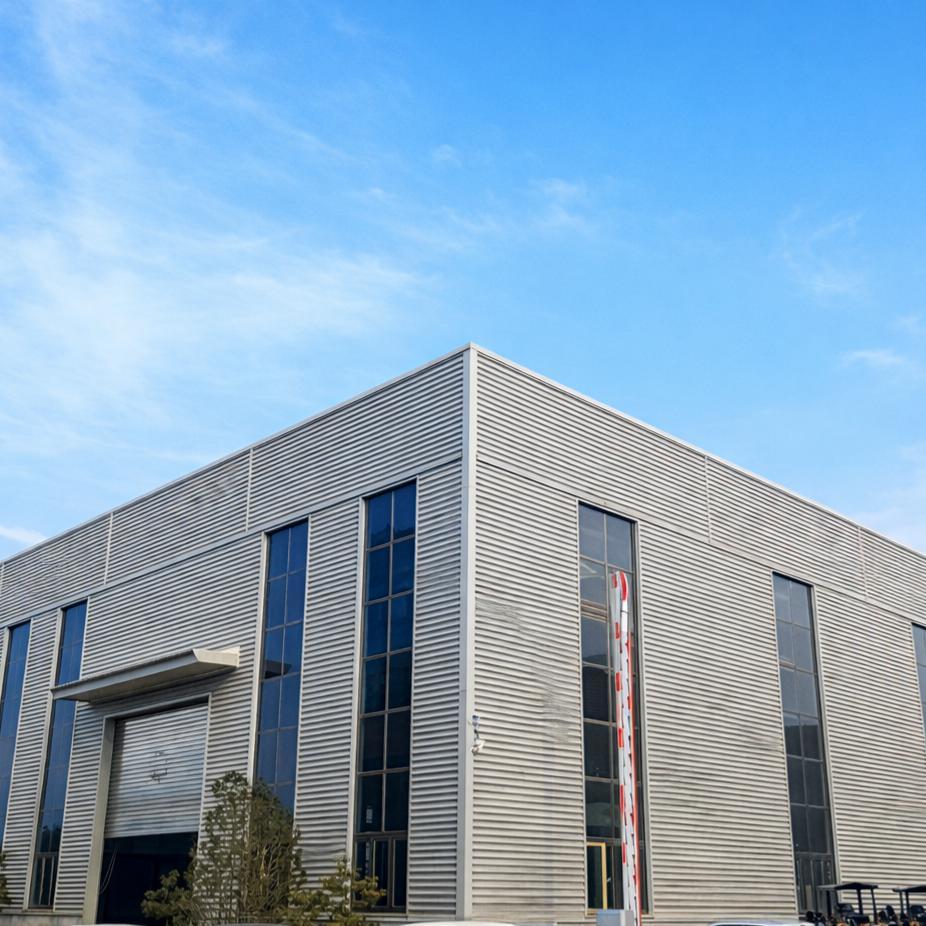
Hefei GLS Forklift Co., Ltd. is a specialized manufacturer and exporter of high-performance construction machinery, headquartered in the Anhui province, China. GLS machinery products include: excavators, loaders, road rollers, forklifts, small tracked vehicles. With over a decade of R&D and production expertise, we have established ourselves as a trusted partner in the construction equipment industry.
Source Factory: With over a decade of production and sales experience, quality is assured.
Innovative Technology: As a trusted manufacturer of construction machinery, we actively incorporate advanced production processes and intelligent technologies to continuously enhance product performance.
Global Certification: Products meet CE, ISO, and other industry certifications.
Customized Solutions: Modular design allows rapid adaptation to mining, forestry, and urban construction scenarios. Currently exported to Asia, South America, Africa, Europe and the Middle East and more than 100 countries and regions, welcome friends from all over the world to visit our factory.
GLS machinery products include: excavators, loaders, road rollers, forklifts, small tracked vehicles. With over a decade of R&D and production expertise, we have established ourselves as a trusted partner in the construction equipment industry.

Essential engineering variables evaluated by global procurement directors before purchasing heavy equipment.
CapEx vs. OpEx is the pivotal factor in modern port logistics. Electric reach loaders require higher upfront capital investment but yield drastic operational savings: up to 70% lower energy costs, elimination of engine oil filter replacements, and significantly extended service intervals (from 250 hours to 1000 hours).
Evaluating load capacity at maximum reach is vital. A loader rated for 45 tons on the first row may only handle 31 tons on the second row and 15 tons on the third. High-tensile steel boom construction and high-performance hydraulic cylinders ensure zero deflection under maximum load stress.
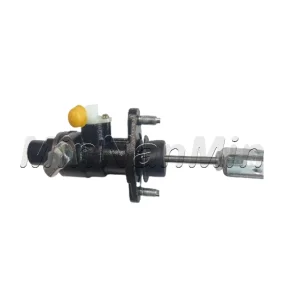
Modern equipment compliance requires FOPS/ROPS certified cabs, 360-degree camera arrays, anti-rollover dynamic balance protection, and automated steering brake cylinder control systems (compatible with high-spec original equipment parts).
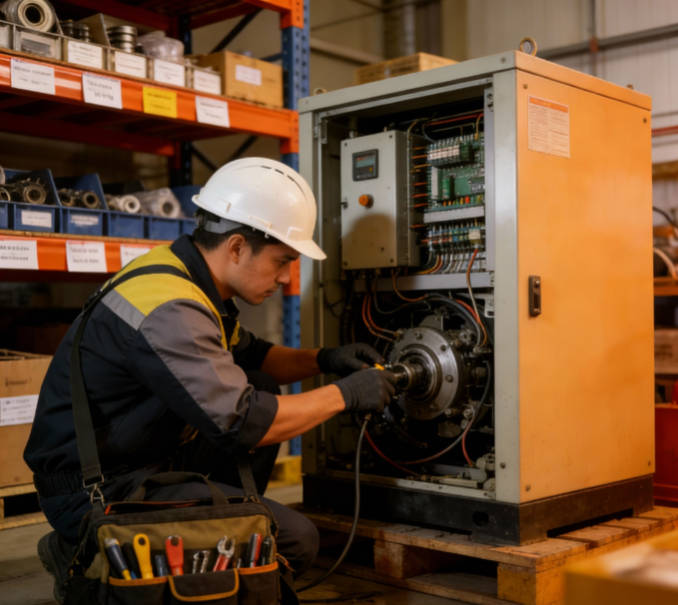
Unplanned machine downtime costs thousands of dollars per hour in busy sea ports. Sourcing equipment built with globally accessible components—such as Isuzu diesel engines, Caterpillar-compatible joystick controls, or Toyota brake cylinders—ensures immediate spare part replacement worldwide.
From sea port intermodal yards to remote mining and agricultural logistics.
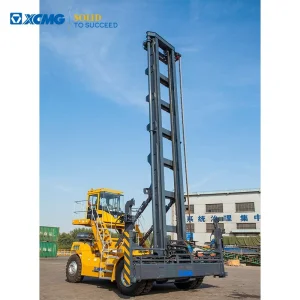
Designed for fast-paced 24/7 container handling. High-tonnage reach loaders manage heavy 20ft and 40ft containers, stacking them up to six rows high and three rows deep with precision spreader attachments.
Optimized for transferring freight containers directly from railcars to flatbed trucks. Telescopic boom extensions allow operators to lift across multiple rail tracks effortlessly.
Telescopic handlers with capacities ranging from 3.5 to 6 tons excel in moving heavy agricultural loads, forestry timber, and bulk construction aggregates across uneven terrain.
Explore our extended catalog of industrial machinery, reach stackers, and precision parts.
Expert answers to common engineering, procurement, and shipping queries.
A Reach Stacker / Reach Loader is a heavy-duty material handling vehicle (typically 9t to 45t capacity) engineered specifically for stacking ISO shipping containers in port terminals and intermodal rail yards. A Telescopic Handler (Telehandler) is a lighter, highly versatile lift truck (typically 0.5t to 6t capacity) featuring a multi-stage extendable boom used in construction, agriculture, and general material transport with attachments like buckets, grapples, and forks.
High-voltage lithium electric reach loaders eliminate diesel exhaust emissions entirely, fulfilling stringent port environmental policies. Furthermore, electric drivelines deliver instantaneous torque, reduce energy consumption costs by over 50%, significantly reduce maintenance costs by eliminating internal combustion engines, and operate with vastly lower cabin noise levels.
Key international compliance certifications include ISO9001 for quality management, CE certification for European Union safety compliance, EPA certification for internal combustion engine emissions in North America, and EAC certification for Eurasian Customs Union markets. Leading manufacturers like Hefei GLS Forklift Co., Ltd. maintain full compliance across these frameworks.
Yes. Modular quick-hitch hydraulic couplings allow machines to swap seamlessly between container spreaders, heavy cargo forks, log grapples, aggregate buckets, and specialized crane hooks, maximizing operational versatility across construction, forestry, and mining hubs.
China Industry 4.0 integration utilizes standardized component architecture across hydraulic pumps, electrical controllers, and drive axles. High compatibility with worldwide OEM components (such as Toyota brake master cylinders or Caterpillar-style joysticks) guarantees fast global supply chain dispatch and minimal equipment maintenance delays.
 GLS Forklift