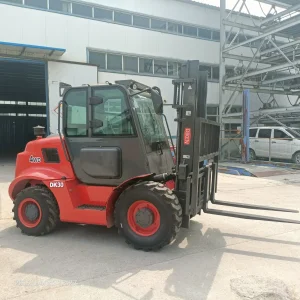
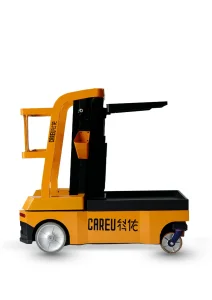
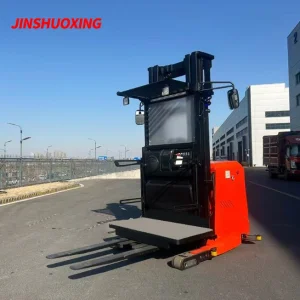
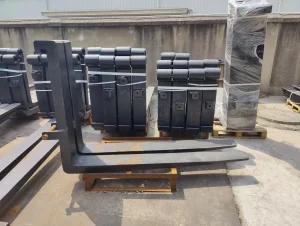
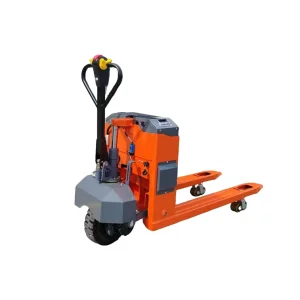
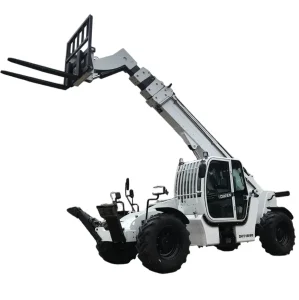
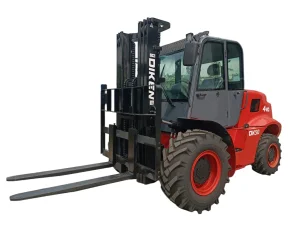
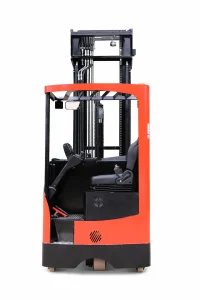
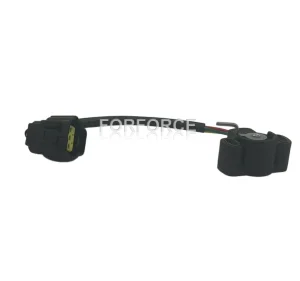
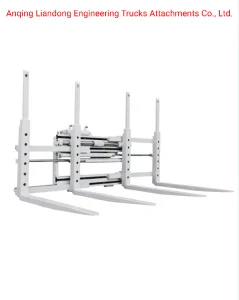
Explore our top-tier material handling configurations, robust off-road pneumatic layouts, and warehouse automation systems engineered to meet international safety and performance standards.
An authoritative analysis of pneumatic suspension technology, rough terrain adaptability, and operational mechanics.
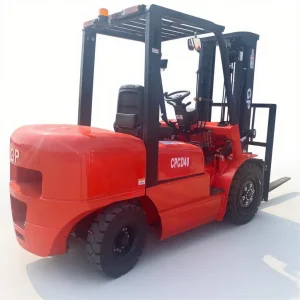
Unlike solid tires, pneumatic tires (air-filled or radial ply) offer pneumatic cushioning that absorbs severe shocks from uneven ground surfaces. In rough terrain settings such as construction sites and timber mills, this cushioning drastically reduces structural stress on the mast, steering axle, and hydraulic cylinders. By dampening the vibrational energy, pneumatic tires prevent premature component fatigue, ensuring a significantly longer life-cycle for the chassis.
Rough terrain pneumatic forklifts utilize deep tread patterns designed for maximum displacement of mud, gravel, and loose soils. The wide footprint distributes the overall machine weight evenly, reducing ground pressure. This distribution prevents the forklift from sinking into soft ground, maintaining a consistent traction coefficient even during maximum load lifts. Coupled with 4WD drivetrains, these units effortlessly negotiate steep inclines and slick surfaces.
Whole-body vibration (WBV) is one of the leading causes of operator fatigue and long-term spinal issues. The integration of high-grade pneumatic tires functions as a primary suspension tier. By neutralizing high-frequency oscillations before they reach the cabin, operators can safely work extended shifts with improved focus, reducing onsite accidents and boosting material handling speeds.
When hoisting loads up to 12 meters, minimal ground imperfections can cause severe mast sway. Modern pneumatic forklift configurations employ reinforced sidewalls (solid-pneumatics or dual-tread systems) to counteract lateral deflection. This dual nature ensures that the forklift retains the flexibility to traverse rough tracks while displaying rigid stability during vertical stacking cycles.
How industry-focused manufacturing hubs provide massive R&D scale, cost efficiencies, and quality assurances for global importers.
Anhui province, particularly Hefei, serves as China's premier cluster for forklift development. By grouping key steel fabricators, precision transmission manufacturers, hydraulic cylinder engineers, and electronic control developers within a narrow geographical radius, transportation delays and raw material markups are virtually eliminated. This centralization empowers Hefei GLS Forklift Co., Ltd. to construct high-spec machinery with a significantly streamlined production cycle, transferring direct cost savings to overseas buyers without sacrificing components' integrity.
Chinese heavy-equipment factories excel in rapid custom prototyping. Using modular chassis structures, factories can easily swap internal systems—such as transitioning a standard diesel 4-ton layout to a lithium-ion battery system or integrating specialized masts like triple stage full free lifts. This flexibility allows global buyers to tailor machines precisely to regional emissions and workspace dimensions.
Modern manufacturing plants in China rely heavily on robotic welding, automated laser cutters, and electronic diagnostics test tracks. Every pneumatic tire forklift undergoes static and dynamic load tests exceeding 125% of rated capacity. The integration of ISO 9001 and CE certifications ensures compliance with strict European and American safety directives.
Custom engineering solutions designed to tackle complex logistics and heavy industrial bottlenecks across the globe.
Operating in salty, humid ocean air, port container handlers require robust paint treatments and heavy-duty pneumatic tires to absorb shocks when crossing rail tracks and concrete cracks. Dual pneumatic setups on the drive axles provide lateral stability when handling off-center heavy containers or shifting heavy steel coils.
Rough terrain areas are littered with sharp debris, wood shards, and jagged rocks. For these high-puncture environments, factories configure forklifts with solid-pneumatic tires (solid rubber compounds shaped like pneumatic tires). These puncture-proof alternatives withstand grueling tire abuse while retaining the high ground clearance and wide stance required for forest trails.
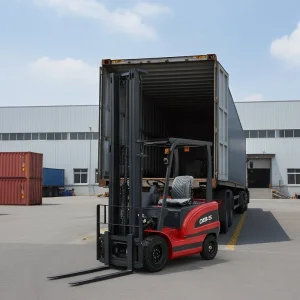
Historically, companies were forced to operate two distinct fleets: electric cushion tire forklifts for indoor warehouses and diesel pneumatic forklifts for outdoor loading yards. With high-capacity lithium-ion technology, a single electric pneumatic forklift can seamlessly move from clean indoor food-processing zones directly onto gravel loading bays. This drastically reduces B2B fleet acquisition and operational costs.
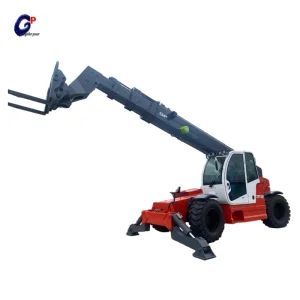
With compact dimensions and telescopic booms (such as our 2.5-ton to 4-ton telehandlers), developers can maneuver easily in tight urban alleyways. Multi-wheel steering configurations (4X4X4 drive systems) allow crab steering and tight radius turns, accelerating construction cycles.
Learn more about our production facility, global distribution networks, and quality assurance framework.
Hefei GLS Forklift Co., Ltd. is a specialized manufacturer and exporter of high-performance construction machinery, headquartered in the Anhui province, China. GLS machinery products include: excavators, loaders, road rollers, forklifts, and small tracked vehicles. With over a decade of R&D and production expertise, we have established ourselves as a trusted partner in the construction equipment industry.
Our modular design philosophy allows rapid adaptation to mining, forestry, and urban construction scenarios. Currently exported to Asia, South America, Africa, Europe, and the Middle East, our solutions span more than 100 countries and regions. We warmly welcome clients and partners from all over the world to visit our manufacturing facilities.
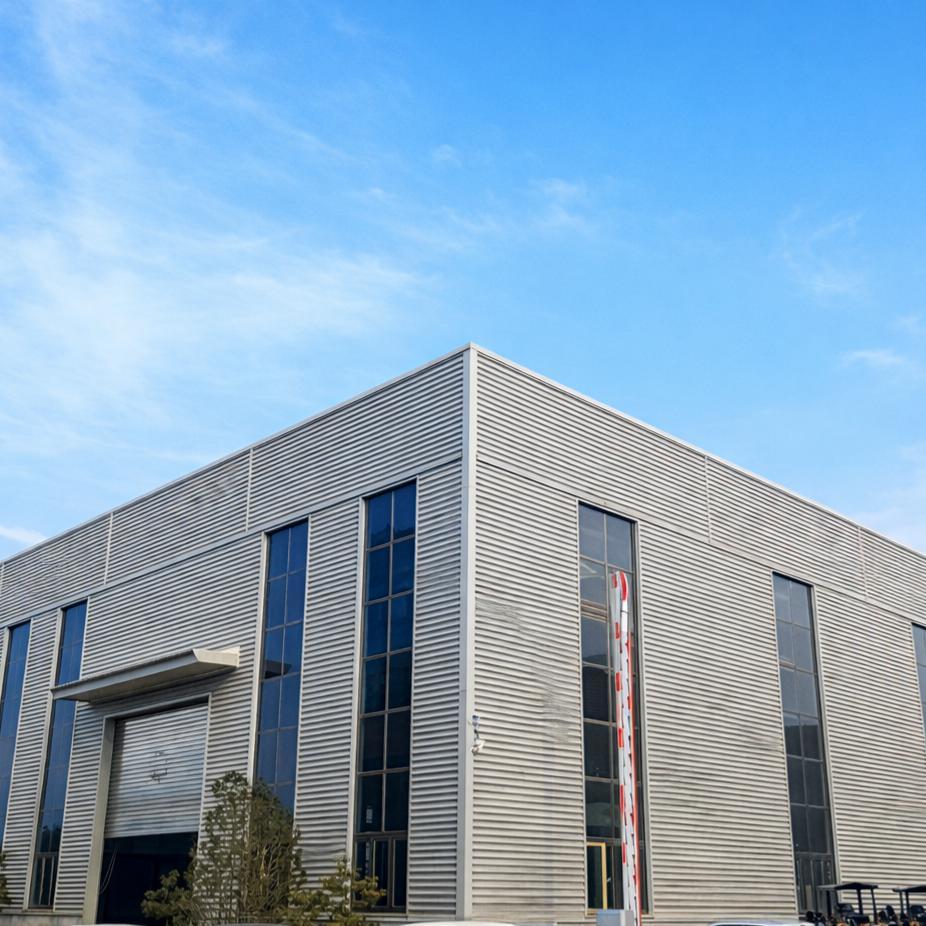
With over a decade of production and sales experience, quality is assured.

Products meet CE, ISO, and other industry certifications.
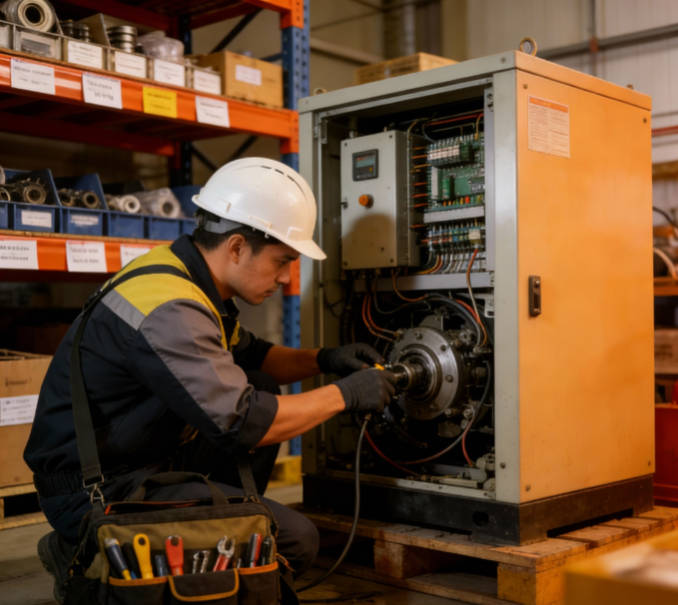
Modular design allows rapid adaptation to mining, forestry, and urban construction scenarios.
Key evolutionary vectors shaping the next generation of industrial material handling equipment.
Lead-acid systems and internal combustion engines are rapidly being replaced by high-voltage Lithium Iron Phosphate (LiFePO4) systems. Operating at voltages from 80V up to 300V+, these modern electric powertrains deliver equivalent torque curves to diesel variants while supporting rapid opportunity charging (charging during lunch breaks) and zero ongoing maintenance requirements.
Global fleet operators demand actionable data. Modern heavy forklifts now come standard with integrated GPS tracker modules, shock sensors, battery health monitors, and wireless telemetry systems. Operations managers can remotely analyze driving behaviors, diagnose mechanical faults, and optimize dispatch pathways.
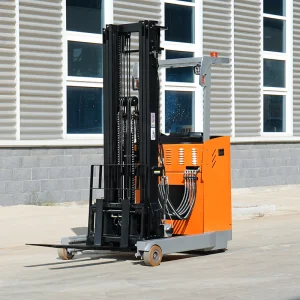
Autonomous mobile robots (AMRs) and automated laser-guided order pickers are transitioning from highly structured indoor corridors to outdoor pneumatic-tire applications. Dynamic navigation sensors, LiDAR arrays, and AI obstacle-recognition cameras allow automated pickers to operate outdoors alongside human-driven fleets safely.
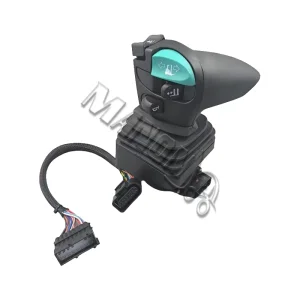
Traditional floor levers are increasingly replaced by armrest-integrated joystick controls and proportional valves. This reduces operator wrist fatigue, enhances picking speed, and allows operators to precisely control micro-movements of attachment accessories like rotating clamps or side shifters.
A professional criteria checklist designed to mitigate sourcing risks and ensure long-term fleet uptime.
Evaluating initial unit cost against localized energy prices, maintenance intervals, and estimated resale value over a 5 to 7-year lifecycle.
Insist on CE certificate compliance, ANSI/ITSDF alignment, and ISO 9001 factory floor tracking. This prevents customs clearance delays.
Ensure critical components (valves, controllers, tire treads) are easily sourced via established spare parts programs, guaranteeing minimum downtime.
Get technical answers to the most common questions raised by procurement managers and field operations engineers.
Explore our specialized heavy lifting platforms, 4X4 handlers, customized attachment components, and warehouse logistics accessories.
 GLS Forklift