How To Reduce Operational Costs In Material Handling starts with observing the work, not buying new equipment. A forklift crossing the same aisle repeatedly may signal poor slotting. An idle conveyor can point to mismatched work rates. Small delays accumulate. So do unnecessary touches. Taiichi Ohno, a Toyota Production System leader, is often credited with saying, “Costs do not exist to be calculated. Costs exist to be reduced.” His principle encourages teams to look for waste in everyday processes, not just budget lines.
A practical cost review can track labor hours, equipment utilization, travel distance, damage, and order accuracy. Walk a shift with operators. Watch where pallets wait, where routes cross, and where replenishment arrives too early or too late. Then test focused changes, such as moving fast-moving items closer to dispatch or adjusting replenishment triggers. Measure the result against a clear baseline. Safety matters, too; reducing travel must not create rushed driving or blocked walkways. Not every improvement pays off. A layout change can shift congestion elsewhere, and software may add complexity before it saves time. That deserves honest review. The strongest plan combines reliable site data, operator experience, and regular checks, while recognizing that each facility has different constraints. This outline explores practical ways to lower handling costs without treating speed as the only measure of success.
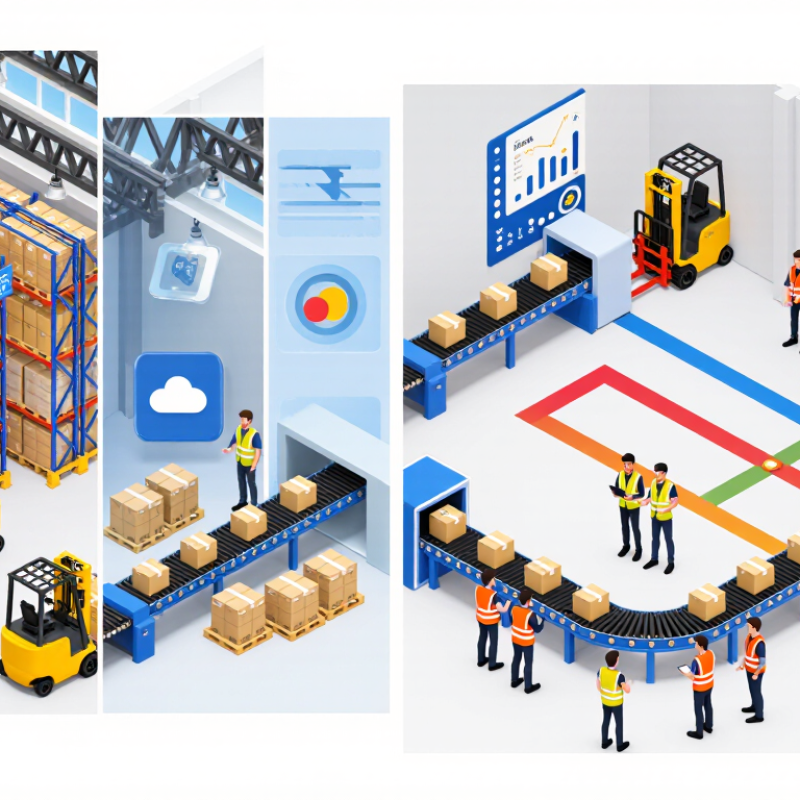
Material-handling costs rarely come from equipment purchases alone. They build through labor hours, forklift maintenance, energy use, long travel paths, product damage, and space tied up by slow-moving inventory. The CSCMP’s 2024 State of Logistics Report estimated U.S. business logistics costs at $2.3 trillion, or 8.7% of GDP. That estimate is broad. It covers more than warehouse handling, so it is not a warehouse benchmark. Still, it puts everyday inefficiencies in perspective. A picker walking an extra aisle for each order loses paid minutes across an entire shift. Small delays add up.
Labor is a sensible place to investigate, but it is not the whole picture. Track labor hours per order, overtime, equipment downtime, damage rates, and travel time by shift or zone. MHI’s 2024 Annual Industry Report found that 55% of surveyed professionals expected to adopt robotics and automation within five years. That signals investment interest, not guaranteed savings. Before buying equipment, compare its full cost with the specific bottleneck it should address. A neat spreadsheet can miss awkward realities, such as congested aisles or inconsistent picking methods. Those details matter.
A costly material-handling route often begins with a layout that no longer matches the work. Map one product’s journey from receiving to storage, picking, packing, and dispatch. Mark every stop, backtrack, and queue on a simple floor plan. Walk the route. A clipboard and a timed observation can reveal more than a polished diagram.
Place fast-moving items near dispatch, while keeping replenishment paths separate from busy picking lanes. Use clear, consistent floor markings and keep staging areas out of travel aisles. The Bureau of Labor Statistics reported 4.4 recordable injury cases per 100 full-time workers in transportation and warehousing in 2023. That figure covers a broad sector, not a single facility, but it reinforces why safe, unobstructed movement deserves attention alongside speed.
Measure travel distance, waiting time, touches per order, and near-misses before changing the layout. The 2024 MHI Annual Industry Report found that 55% of surveyed supply-chain professionals planned to increase technology investment. Visibility tools can help locate bottlenecks, but they cannot fix a poor route by themselves. A modest trial with one aisle may be wiser than moving everything at once. Some congestion will remain; document it rather than pretending the new layout solved every problem.
Illustrative planning model, not measured facility data or an industry benchmark. It assumes monthly labor costs fall by 15%, equipment costs by 10%, and damage and rehandling costs by 20% after layout and flow improvements. The modeled total decreases from $40,000 to $34,100. Replace these estimates with figures from a facility audit.
Choosing equipment that fits the work can reduce wasted travel, excess capacity, and avoidable maintenance. Start with actual operating conditions: pallet weight and dimensions, aisle width, lift height, floor quality, and peak-hour volume. A compact truck may suit narrow aisles, while a higher-capacity model can prevent repeated trips for heavier loads. Yet buying for the busiest hour alone may leave equipment underused for much of the week.
The 2024 MHI Annual Industry Report found that 55% of surveyed supply chain professionals planned to increase investment in technology and innovation. That is a reason to assess equipment alongside workflow, not to buy the most advanced option by default. Compare expected utilization, energy use, service requirements, and operator training needs. A spreadsheet estimate helps, but it can miss real bottlenecks; observe a full shift and track travel time before deciding.
Tips: Measure the tightest aisle and heaviest routine load. Match lift height to actual rack levels. Trial equipment during a busy shift, then review utilization and maintenance costs after several weeks. A little spare capacity is useful. Too much gets expensive.
| Equipment Type | Best-Fit Operational Need | Typical Capacity or Reach | Cost-Control Benefit | Checks Before Selection |
|---|---|---|---|---|
| Manual pallet jack | Short, occasional pallet moves on smooth, level floors. | Many standard models are rated around 2,000–2,500 kg; confirm the model’s load rating. | Low purchase and maintenance requirements where powered travel is unnecessary. | Check load weight, pallet dimensions, floor condition, travel distance, and required turning space. |
| Electric pallet truck | Frequent horizontal pallet transport over longer routes or across busy shifts. | Capacity varies by model; common units are designed for loads of roughly 1,500–3,000 kg. | Reduces manual pushing effort and can improve consistency on repeated transport routes. | Assess daily travel distance, gradients, aisle width, battery charging access, and pedestrian separation. |
| Counterbalance forklift | Loading and unloading vehicles, plus general pallet handling where loads must be picked up from the floor. | Typical warehouse models often handle approximately 1,500–5,000 kg; rated capacity decreases as load center distance increases. | One truck can serve multiple floor-level handling tasks when the load mix and site layout are suitable. | Verify load weight and dimensions, lift height, attachments, turning radius, floor capacity, and indoor emissions requirements. |
| Reach truck | High-density indoor storage in narrow aisles with rack-based pallet handling. | Many models lift roughly 1,000–2,500 kg to several metres; capacity at height depends on the load and truck configuration. | Can support narrower aisle layouts and make better use of vertical storage space. | Confirm aisle width, rack height, load dimensions, floor flatness, clearances, and the rated capacity at the required lift height. |
| Order picker | Piece or case picking from shelving and rack locations at elevated levels. | Platform and load limits differ substantially by model; use the manufacturer’s rated capacity for the intended lift height. | Matches equipment to each-picking work instead of using a larger forklift for every picking task. | Review pick rates, working height, platform capacity, aisle condition, fall-protection procedures, and charging plan. |
| Conveyor system | Steady, repeatable movement of cartons or totes between fixed process points. | Throughput depends on conveyor speed, item spacing, accumulation design, and the weight and dimensions of items. | Can reduce repeated manual transfers on stable, high-volume routes. | Measure hourly volume, item range, route changes, accumulation needs, guarding, and the cost of downtime or layout changes. |
| Hand truck or platform cart | Small loads, short distances, and flexible movement where pallet equipment is impractical. | Rated capacity varies by frame, wheels, and configuration; do not exceed the equipment’s stated load limit. | Provides a simple option for light, varied tasks without assigning powered equipment to low-volume moves. | Check load stability, stairs or thresholds, wheel type, route distance, handle height, and operator push or pull effort. |
Unexpected equipment failures rarely happen at a convenient time. A worn conveyor roller can stop a line, delay orders, and leave workers waiting. Preventive maintenance helps teams find small problems before they become expensive interruptions.
Build a schedule around equipment manuals, operating hours, and actual site conditions. Check belts for fraying, inspect forklift tires, and look for hydraulic leaks during routine rounds. Keep each check specific. “Inspect conveyor” is less useful than “listen for new grinding near the drive end.” Record findings, repair dates, and recurring faults in one shared log. Patterns matter.
Keep spare parts for components that repeatedly cause delays, but avoid stocking everything. That ties up money. Train operators to report unusual noise, vibration, or slower lifting, and give them a clear way to flag concerns. Maintenance teams can then prioritize by safety, production impact, and repair time. A missed inspection can still happen, especially during a rush. Review missed tasks each month, adjust the schedule, and ask whether the checks are practical on a busy shift. Preventive maintenance is not a guarantee against breakdowns; it is a disciplined way to reduce their frequency and limit avoidable downtime.
Train material-handling staff on the tasks that drive daily costs: safe pallet stacking, load checks, equipment inspections, and efficient picking routes. Use short demonstrations on the actual floor, then ask each worker to show the task back. At shift briefings, review one recurring issue, such as damaged cartons or empty equipment batteries. Keep it practical.
Training needs measurable follow-through. The U.S. Bureau of Labor Statistics reported 4.8 recordable injury and illness cases per 100 full-time workers in warehousing and storage in 2022 (Survey of Occupational Injuries and Illnesses). That figure is a warning, not proof that training alone will lower costs. Track incidents alongside product damage, equipment downtime, overtime, and picks per labor hour. Compare results by shift and task, while accounting for changes in order volume.
Set a baseline before training, then review the same measures weekly for at least a month. A simple board beside the dispatch desk can show damaged units, near misses, and downtime by shift. Avoid rewarding speed alone; rushed handling can raise damage and injury risks. Ask workers what slowed them down, and record their suggestions. Some improvements will not work. That is useful data, too. When a metric worsens, observe the task before changing the training.
Track one product from receiving to dispatch on a simple floor plan. Mark stops, queues, and backtracking. Walk the route with a clipboard.
Keep fast-moving items close to dispatch. Separate replenishment paths from busy picking lanes. The best position may change as demand shifts.
Record travel distance, waiting time, touches per order, and near-misses. Compare the same measures after a small trial. One aisle is enough to start.
Use clear floor markings and keep staging areas out of travel aisles. In 2023, transportation and warehousing reported 4.4 recordable injury cases per 100 full-time workers. That broad figure cannot predict one facility’s risk.
Base checks on equipment manuals, operating hours, and site conditions. Inspect belts for fraying, forklift tires, and hydraulic leaks. Keep each check specific.
Record findings, repair dates, and recurring faults in one shared log. “Listen for grinding near the drive end” is more useful than “inspect conveyor.”
Stock parts that repeatedly cause delays, but avoid keeping everything. Excess inventory ties up money. That trade-off deserves review.
Give operators a clear way to report unusual noise, vibration, or slower lifting. Prioritize concerns by safety, production impact, and repair time. Breakdowns can still happen.
Review missed tasks each month and ask whether checks fit a busy shift. Adjust the schedule when needed. A plan that looks good on paper may fail in practice.
How To Reduce Operational Costs In Material Handling begins with understanding where money is being spent. Labor, equipment, energy, repairs, and inefficient movement of goods can all add to operating costs. Reviewing these expenses helps identify practical opportunities for improvement. A well-planned facility layout can shorten travel distances, reduce unnecessary handling, and keep materials moving smoothly through each stage of work.
Choosing equipment that fits the workload and operating environment can prevent overspending while supporting efficient operations. Preventive maintenance helps catch wear and minor issues before they lead to costly downtime or repairs. Staff training also plays an important role: employees who understand safe, efficient procedures can reduce waste and use equipment more effectively. Finally, tracking performance measures such as downtime, energy use, and handling time makes it easier to assess whether cost-saving changes are working and where further improvements are needed.

GLS Forklift