Top 10 Benefits of Automated Material Handling Solutions?

Time:2026-06-16 Author:Charlotte
0%

In today's fast-paced world, businesses increasingly seek efficiency and productivity. Automated material handling solutions arise as a significant game-changer. Experts like Dr. Emily Santos, a leading authority in logistics automation, highlight this shift. Dr. Santos states, "Embracing automation not only reduces costs but also transforms operational dynamics."

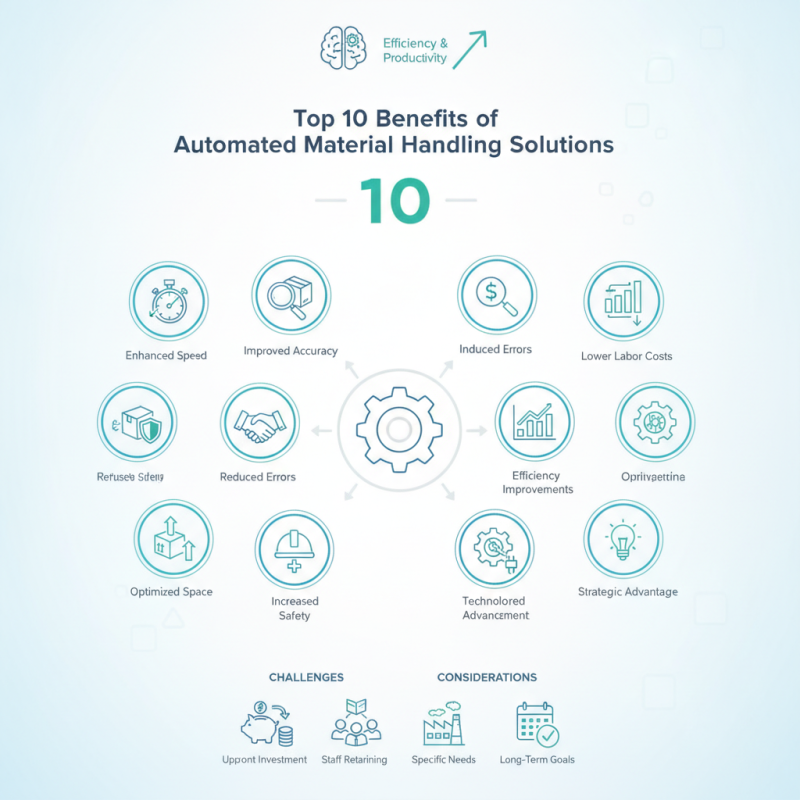
When considering "What Are The Advantages Of Automated Material Handling," several clear benefits emerge. Automated systems enhance speed and accuracy in handling goods. They minimize human error and increase safety in workplaces. Additionally, they optimize space and reduce labor costs. Many companies have reported remarkable efficiency improvements after implementing these technologies.

However, it's essential to reflect on the challenges as well. Transitioning to automated systems might require upfront investment and staff retraining. Not all operations will benefit equally from automation. Companies must evaluate their specific needs. Embracing these solutions necessitates a thoughtful approach, balancing immediate gains with long-term goals.
Top 10 Benefits of Automated Material Handling Solutions?

Benefits of Increased Efficiency in Automated Material Handling Systems

Automated material handling systems significantly enhance efficiency in various industries. These systems streamline operations, reducing the time and labor required for material transport. With the integration of advanced technology, businesses can achieve faster processing times. The result? Quicker response to market demands, leading to improved customer satisfaction.

Investing in automated solutions can lower operational costs. By minimizing human error, these systems reduce waste. Moreover, they can operate continuously, ensuring that work doesn’t halt because of staffing shortages. This consistent performance is essential in today's fast-paced environment where every second counts.

Tip: Assess your current handling processes to identify areas for automation. Consider small changes first; even minor automation can yield significant benefits.

Tip: Regularly train your staff on new systems. Adaptation is crucial for maximizing efficiency and ensuring everyone is on board with the technology.

It's important to note that automation isn't a cure-all. Implementing these systems requires careful planning. Organizations should critically evaluate their needs versus the level of automation. Not all processes will benefit equally from automation. Reflect on specific challenges within your operation to create a more tailored approach.

Reduction of Labor Costs Through Robotics and Automation Integration

Automated material handling solutions are transforming industries. One significant benefit is the reduction of labor costs through robotics and automation integration. According to a study by the Warehouse Automation Research, companies that adopted automated systems reduced labor costs by an average of 30%. This shift allows businesses to operate more efficiently.

Integrating robotics can minimize human error during operations. A report from the International Journal of Robotics indicated that automation decreases the likelihood of mistakes by up to 70%. Errors not only incur costs but also impact productivity. More importantly, robots can handle repetitive tasks. This frees up human workers for complex tasks that require decision-making skills.

However, implementing automation isn’t without challenges. Companies must consider the cost of investment and training. Some employees may feel uneasy about job security. A survey from the Workforce Institute found that 58% of workers worry about losing their jobs to automation. Addressing these concerns is crucial for smooth integration. Organizations need a balanced approach focusing on both technology and human resource needs.

Top 10 Benefits of Automated Material Handling Solutions

Enhancements in Safety Standards and Decrease in Workplace Injuries

Automated material handling solutions have drastically improved safety standards in workplaces. According to the Occupational Safety and Health Administration (OSHA), implementing these systems can reduce workplace injuries by up to 40%. This reduction not only benefits employees but also enhances overall productivity. When workers are safe, they are more focused and engaged in their tasks.

Automation minimizes the need for manual lifting and repetitive motions that lead to injuries. Forklifts, conveyor belts, and robotic systems handle heavy loads efficiently. A report from the National Safety Council states that manual material handling is responsible for nearly 30% of all workplace injuries. By utilizing automated solutions, companies can significantly mitigate these risks.

**Tip:** Ensure regular maintenance of automated systems. Faulty equipment can lead to accidents, counteracting safety improvements. Companies should also train employees to understand the automated systems fully.

**Tip:** Foster a culture of safety that encourages workers to report potential issues. Early detection can prevent injuries and ensure a safer work environment. Integrating automated systems is just one step; ongoing safety practices are crucial.

Real-Time Data Analytics for Improved Inventory Management and Tracking

Real-time data analytics transforms inventory management. Automated material handling solutions collect vast amounts of data. This immediate insight allows businesses to make informed decisions. For instance, tracking inventory in real time minimizes stockouts and overstock. Companies can adjust supply chains instantly based on current demand.

Data analytics tools highlight trends and patterns. These insights can show which products sell quickly. They can also reveal slow movers that need improvement. However, not all businesses utilize this data effectively. Some may struggle with integrating analytics into their existing systems.

Manual processes can lead to delays and errors. Automated systems reduce these risks significantly. Yet, reliance on automation can create challenges. Employees might resist change or feel undervalued. It’s essential to foster a culture that embraces technology. Balancing automation with human insight is crucial for success.

Scalability and Flexibility in Warehouse Operations to Meet Demand Changes

Automated material handling solutions offer significant scalability and flexibility in warehouse operations. Businesses often face fluctuating demand, which can be challenging to manage. Automated systems adapt quickly to changing circumstances, allowing for smoother transitions during peak periods or unexpected drops in demand. This ability enhances efficiency and reduces operational costs over time.

Applying automated solutions can be transformative, but it's essential to evaluate your specific needs first. Tip: Assess the volume of goods and seasonal trends to understand how scaling operations will impact your workflow. In many cases, companies underestimate their future needs. It’s critical to plan ahead.

Another benefit is improved layout flexibility. Automated systems can make it easier to reorganize warehouse space as needed. This can be an ongoing process for businesses. However, keep in mind that frequent changes may create confusion if not managed properly. Tip: Document every layout change and observe how it affects productivity. Not all adjustments will yield positive results, so learning from mistakes is vital. This iterative approach helps refine operations and adapt effectively to demand variations.

Top 10 Benefits of Automated Material Handling Solutions

Benefit Description Impact on Operations
Increased Efficiency Automated systems can operate 24/7, significantly boosting productivity. Timely order fulfillment and reduced labor costs.
Scalability Easily adapt to changes in demand by adding or modifying equipment. Cost-effective growth and responsiveness to market trends.
Improved Safety Reduces the risk of accidents by minimizing human intervention. Lower workers' compensation costs and enhanced workforce morale.
Cost Savings Automation reduces operational costs in the long term. Improved profit margins and resource allocation.
Enhanced Accuracy Automated systems minimize errors in inventory management. Better customer satisfaction and reduced return rates.
Real-Time Tracking Allows for continuous monitoring of inventory and order status. Increased transparency and faster decision-making.
Space Optimization Maximizes warehouse space through efficient layout and storage solutions. Effective use of space leading to higher inventory capacity.
Flexibility Systems can be reconfigured to meet changing operational needs. Ability to swiftly adapt to new challenges or requirements.
Data Analytics Provides insights into operations, helping to make informed improvements. Enhanced strategic planning and operational efficiency.
Sustainability Reduces waste and energy consumption through optimized processes. Positive impact on corporate social responsibility and branding.

FAQS

: How do automated material handling systems improve efficiency?

: They streamline operations and reduce time and labor for transporting materials.

What is one major benefit of investing in automated solutions?

They lower operational costs by minimizing human error and waste.

Can automated systems operate continuously?

Yes, they can, ensuring work continues without interruption from staffing issues.

What should businesses do before implementing automation?

Assess current handling processes and identify areas where automation can help.

Why is training staff on new systems important?

Regular training maximizes efficiency and ensures staff adapt to the technology.

Is automation a one-size-fits-all solution?

No, it requires careful planning. Not all processes benefit equally from automation.

How does real-time data analytics aid inventory management?

It helps track inventory to minimize stockouts and adjusts supply chains based on demand.

What challenges might arise with data analytics in businesses?

Some businesses might struggle to integrate analytics into their existing systems effectively.

Why is a balance between automation and human insight important?

Reliance on automation alone can lead to employee resistance and feeling undervalued.

What reflection is necessary for tailoring automation approaches?

Organizations should reflect on their specific challenges to create a more suited strategy.

Conclusion

Automated material handling solutions offer several advantages that significantly enhance operational efficiency. One of the key benefits is the increased efficiency in processes, as automated systems streamline the flow of materials, reducing delays and improving throughput. Furthermore, the integration of robotics and automation leads to a significant reduction in labor costs, allowing businesses to allocate resources more effectively. Enhanced safety standards are another benefit, with automation decreasing the risk of workplace injuries and promoting a safer working environment.

In addition to cost savings and safety improvements, automated systems provide real-time data analytics, which are essential for effective inventory management and tracking. This capability allows companies to respond swiftly to changes in demand, ensuring that their warehouse operations are both scalable and flexible. In conclusion, when considering what are the advantages of automated material handling, it becomes clear that these systems not only improve efficiency and safety but also offer a strategic advantage by enabling businesses to adapt to an ever-changing marketplace.

Charlotte

Charlotte

Charlotte is a seasoned marketing professional with a deep understanding of the company's portfolio and a passion for elevating its presence in the market. With a keen eye for detail and a commitment to excellence, she ensures that our professional blog is regularly updated with insightful articles......