Improving material handling in China starts with observing the floor, not buying equipment. A busy electronics warehouse may show blocked aisles, mixed pallets, and repeated forklift movements. Small delays multiply. These details often reveal more than a dashboard.
How To Improve Material Handling Efficiency depends on the facility’s products, layout, labor skills, and delivery pressure. Managers should map every movement from receiving to storage, picking, packing, and dispatch. Measure travel distance, handling time, damage rates, inventory accuracy, and equipment downtime. These figures create a reliable baseline. They also expose uncomfortable weaknesses. A low-cost process may still waste hours each day.
Practical improvements can include clearer storage locations, standardized pallet sizes, barcode scanning, and better warehouse management system integration. In suitable operations, conveyors, automated guided vehicles, or robotic picking may reduce repetitive work. However, automation should follow process improvement. Otherwise, it can simply move inefficiency faster. Local engineers and experienced operators should test proposed changes together. Their knowledge may uncover temperature limits, loading-bay congestion, or supplier packaging problems.
Safety and compliance must remain part of the design. Equipment requires documented inspections, operator training, emergency procedures, and suitable maintenance records. Reliable suppliers should provide technical specifications, service support, and performance evidence. Pilot testing is valuable. A small zone can reveal unexpected errors before wider investment.
No layout is perfect. Demand changes, labor turnover, and seasonal peaks can weaken a successful plan. Continuous reviews, employee feedback, and honest reporting help maintain gains. The strongest Chinese facilities improve through measured experiments, disciplined execution, and willingness to revise assumptions.
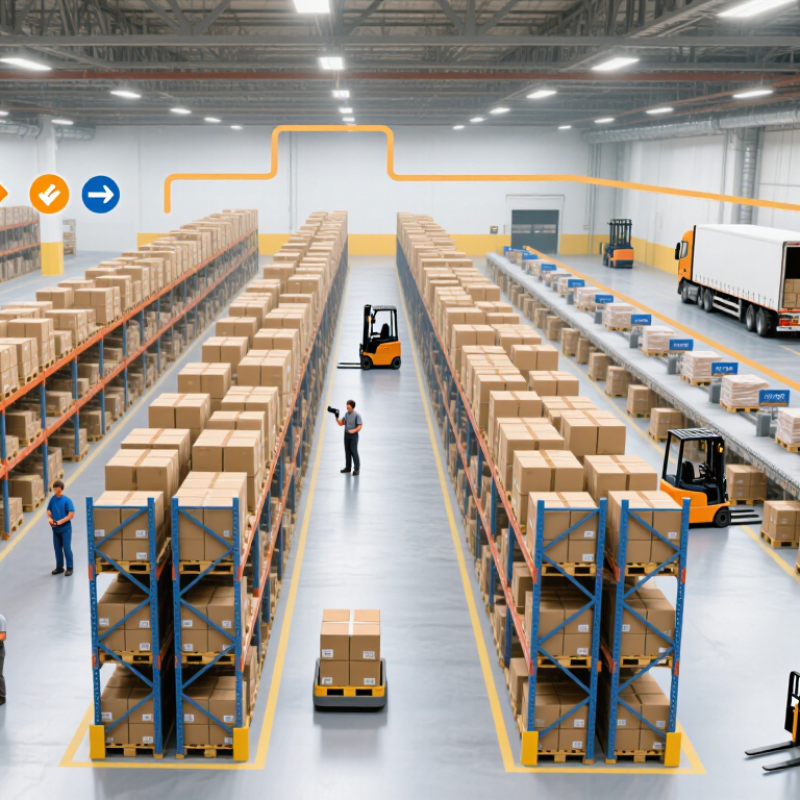
Material handling in China often slows at the connections between factory floors, warehouses, and transport teams. Rapid production changes create mixed pallets, unclear labels, and uneven storage rules. In coastal areas, space can be expensive, while inland sites may face longer transport links. Labor turnover adds another challenge. New operators may learn equipment informally, creating inconsistent practices and avoidable delays.
The strongest improvement starts with a site-level review. Track walking distance, waiting time, damaged goods, and equipment routes for two weeks. Then compare results by shift, product type, and storage zone. Use clear labels, fixed locations, barcode checks, and standard loading heights. Equipment should match aisle width, floor conditions, and daily weight demands. Safety training must be practical, documented, and repeated after process changes. Digital tools can help, but poor data will only produce faster confusion. I have seen teams measure speed while ignoring congestion near receiving docks. That is a useful warning.
Tips: Mark pedestrian lanes clearly. Keep fast-moving items near dispatch. Inspect pallets before use. Hold a short daily review. Ask operators what fails first. Their answers may challenge the original layout. Do not assume one solution fits every warehouse. Weather, building design, supplier timing, and local work habits can change the results.
China’s warehouse and logistics operations vary sharply by region, industry, and facility age. A modern distribution center may use automated storage, barcode scanning, and real-time inventory records. Nearby, another site may still depend on paper forms and verbal instructions. The picture is not uniform.
A practical assessment should begin with a floor walk during the busiest shift. Measure receiving time, picking accuracy, dock-to-stock time, order cycle time, and equipment utilization. Watch how workers handle cartons, not only what the procedure manual says. Repeated walking often reveals poor slotting. Unlabeled staging areas create hidden delays. Congested aisles also increase damage and safety risks.
Data quality deserves close attention. Inventory records can look accurate while physical counts show gaps. Cycle counting should focus on fast-moving and frequently adjusted items. Interviews with drivers, pickers, and supervisors can expose problems that dashboards miss. This method takes longer, but it reflects actual experience.
Some facilities improve quickly by redesigning storage zones, separating inbound and outbound traffic, and setting clear replenishment points. Others invest in technology before fixing basic processes. That approach can produce expensive confusion. Regional transport conditions, seasonal demand, labor turnover, and supplier reliability must also be reviewed. Any assessment has limits. A two-day audit may miss peak-season pressure, unusual orders, or maintenance failures.
Improving material handling efficiency in China starts with selecting equipment that fits the workflow, not simply buying newer machines. In a busy warehouse, measure travel distance, picking frequency, load weight, aisle width, and seasonal volume. A narrow-aisle reach truck may outperform larger equipment when floor space is limited. However, it can create congestion if charging areas are poorly placed. Small trials expose these problems early.
Automation should solve a measured bottleneck. The International Federation of Robotics reported 276,288 industrial robot installations in China during 2023, representing 51% of global installations. This figure shows strong adoption, but automation alone does not guarantee efficiency. Conveyors, automated storage systems, mobile robots, and vision tools need reliable data and stable operating rules. Start with barcode accuracy and location control. Then connect equipment through a warehouse management system.
Energy use also deserves attention. Select electric equipment with regenerative braking, opportunity charging, and battery monitoring where duty cycles support them. The 2024 MHI Annual Industry Report identified talent shortages as a major supply chain challenge, affecting 55% of respondents. Simple interfaces and remote diagnostics can reduce training pressure. Yet software integration is often underestimated. In practice, inconsistent master data can stop an advanced system faster than mechanical failure. Track order cycle time, picking accuracy, equipment availability, and energy per handled unit before expanding the project. Mistakes are useful when they remain measurable.
| Equipment or Technology | Typical Application in China | Typical Load Capacity | Typical Operating Speed | Potential Efficiency Benefit | Best-Fit Conditions | Key Selection Considerations |
|---|---|---|---|---|---|---|
| Manual Pallet Truck | Short-distance pallet movement in small warehouses, retail backrooms and low-throughput storage areas. | 2.0–2.5 tonnes | Approximately 2–4 km/h, depending on operator and floor conditions | Low purchase and maintenance cost; suitable for occasional movements. | Travel distances below 30 metres and fewer than approximately 30 pallet movements per hour. | Use only on smooth, level floors. Excessive travel distance increases labor time and operator fatigue. |
| Electric Pallet Truck | Horizontal transport between receiving, storage, picking and dispatch zones. | 1.5–2.5 tonnes | Approximately 4–8 km/h | Reduces physical effort and can increase repeated pallet movement productivity by roughly 20–40% compared with manual handling. | Medium-throughput warehouses with regular pallet flows and travel distances above 30 metres. | Compare battery capacity, charging method, aisle width, ramp performance, safety controls and operator training requirements. |
| Electric Counterbalance Forklift | Loading and unloading vehicles, block stacking and general indoor material handling. | 1.5–3.5 tonnes | Approximately 12–17 km/h, subject to site safety limits | Provides flexible handling for mixed pallet sizes and frequent loading-dock operations. | Warehouses requiring both indoor transport and lifting to moderate heights. | Check residual capacity at the required lift height, turning radius, charging infrastructure, visibility and floor load rating. |
| Reach Truck | High-density pallet storage in narrow aisles and high-bay warehouse locations. | 1.2–2.5 tonnes | Approximately 9–14 km/h | Can support high-density storage with lift heights commonly reaching 8–12 metres, reducing floor space required per pallet position. | Distribution centers using selective racking and requiring high vertical storage utilization. | Match the truck to aisle width, rack height, mast configuration, battery runtime, floor flatness and required visibility. |
| Powered Conveyor System | Continuous movement of cartons, totes or parcels between picking, sorting, packing and dispatch areas. | Commonly 10–100 kg per carton or tote, depending on design | Approximately 0.3–2.0 m/s | Creates stable, repeatable flow and reduces manual walking between fixed process stations. | High-volume operations with predictable routes and standardized unit loads. | Assess peak throughput, accumulation requirements, noise, emergency stops, maintenance access, dust exposure and integration with scanners. |
| Automated Guided Vehicle or Autonomous Mobile Robot | Repetitive pallet, tote or rack movement between defined warehouse, production and staging locations. | Typical unit-load models: 0.5–2.0 tonnes | Approximately 1–2 m/s | Supports consistent material flow and can reduce repetitive transport labor, especially across multiple shifts. | Facilities with stable routes, standardized loads, suitable floor conditions and sufficient transport volume. | Evaluate navigation reliability, traffic management, fleet size, charging strategy, safety zoning, elevator interfaces and system integration. |
| Warehouse Management System with Barcode or RFID | Inventory control, receiving, put-away, replenishment, picking, cycle counting and dispatch verification. | Not applicable; manages inventory units rather than lifting loads | Transaction processing typically occurs in seconds; performance depends on network and system design | Improves location accuracy, inventory visibility and task sequencing while reducing paper-based errors. | Warehouses handling many stock-keeping units, frequent order changes or multiple storage zones. | Define master-data standards, barcode quality, RFID read zones, user permissions, offline procedures and interfaces with enterprise systems. |
| Warehouse Slotting and Pick-to-Light or Voice Picking | Order fulfillment for fast-moving consumer goods, spare parts, e-commerce and multi-line orders. | Product-specific; commonly applied to cartons, totes and small-item containers | Depends on item size, order profile and travel distance | Places fast-moving items closer to dispatch and provides guided picking instructions to reduce search and walking time. | Operations with repeatable order profiles and a significant proportion of small-item picking. | Review order-line frequency, SKU dimensions, replenishment frequency, ergonomics, exception handling and seasonal demand changes. |
| Planning note: The figures are typical engineering planning ranges rather than guaranteed performance values. Actual efficiency depends on load characteristics, aisle layout, floor quality, shift pattern, order profile, operator training, safety rules and equipment utilization. Before investment, validate the design through time studies, peak-demand simulation and a total-cost-of-ownership comparison. | ||||||
How to Improve Material Handling Efficiency in China?
Optimizing Workflows, Storage Layouts, and Inventory Control
Efficient material handling begins with observing real movement, not trusting an office drawing. In one warehouse, workers crossed the floor repeatedly to collect fast-moving components. We mapped each trip for three shifts and moved those items closer to packing stations. Travel distance fell noticeably, although congestion increased during the afternoon peak.
A practical layout separates receiving, inspection, storage, picking, and dispatch. Clear one-way routes reduce crossing traffic between forklifts and pedestrians. Marked floor zones make temporary storage visible before it becomes permanent. Adjustable shelving also helps, especially when carton sizes change frequently. Leave turning space. Narrow aisles often look efficient until a loaded trolley blocks them.
Inventory control needs accurate records and physical discipline. Use location codes, barcode scans, and cycle counts based on item movement. High-use materials may need weekly checks, while slow-moving stock can follow a monthly schedule. Record damaged packaging immediately, including photographs and quantities. Small discrepancies can hide larger process failures.
Our first storage plan was too rigid. Seasonal demand exposed it. A better approach reviews order data, worker feedback, and near-miss reports every month. Managers should compare handling time, picking errors, stock variance, and waiting time. Improvements should be tested in one zone before expanding across the warehouse. Chinese operating conditions vary widely, so local traffic patterns, humidity, staffing levels, and supplier schedules deserve direct attention.
Optimizing Workflows, Storage Layouts, and Inventory Control
Improving material handling efficiency in China starts with measurement, not new equipment. In one distribution center, we tracked receiving, put-away, picking, and loading separately. The first dashboard looked impressive. It was also incomplete. We had measured worker movement, but ignored waiting time at dock doors. After adding that metric, average truck dwell time reached 47 minutes. The number was uncomfortable, yet useful.
Use a small set of operating indicators: lines picked per labor hour, order accuracy, equipment utilization, damage rate, and dock-to-stock time. Review them by shift, zone, and product type. The 2024 Annual Industry Report by the Material Handling Institute reports that 55% of supply-chain professionals planned to increase technology investment.
Investment alone will not fix a weak process. A scanner can record a delay, but supervisors must investigate its cause. Is inventory misplaced? Are replenishment rules outdated? Is the aisle too narrow during peak hours?
Continuous improvement needs visible experiments. Test one revised picking route for two weeks. Compare it with the previous route using the same order profile. The 2023 Global Warehousing Study found that 73% of warehouse decision-makers expected to adopt automation by 2028.
That ambition needs discipline. Automation may reduce walking, but poor slotting can simply move congestion to another station. In China’s fast-changing fulfillment environment, teams should review results weekly, document exceptions, and admit when a “successful” change creates hidden work.
Delays often occur between factory floors, warehouses, and transport teams. Mixed pallets, unclear labels, and changing production schedules create congestion. Labor turnover can also produce inconsistent equipment practices.
Walk the floor during the busiest shift. Measure receiving time, picking accuracy, dock-to-stock time, waiting time, and equipment use. Watch actual carton handling, not only written procedures.
Compare inventory records with physical counts. Cycle-count fast-moving items more often. Interviews with drivers, pickers, and supervisors can reveal problems dashboards miss.
Place fast-moving materials near packing or dispatch areas. Separate receiving, inspection, storage, picking, and outbound traffic. Leave enough turning space for loaded trolleys.
Use fixed locations, location codes, barcode checks, and regular cycle counts. Record damaged packaging immediately, with photographs and quantities. Small discrepancies may signal larger process failures.
Match equipment to aisle width, floor quality, and daily weight demands. Narrow aisles may appear efficient but block quickly. Inspect pallets before use.
Mark pedestrian lanes clearly and separate them from forklift routes. Provide practical, documented training. Repeat training after process changes.
Not always. Poor data can create faster confusion. Fix labels, locations, and basic procedures before expanding digital systems.
Review weather, humidity, building design, staffing, supplier timing, and local traffic patterns. One solution may fail elsewhere. Our first storage plan was too rigid.
Trial improvements in one storage zone first. Compare handling time, picking errors, stock variance, and waiting time. Review worker feedback and near-miss reports monthly. Two days may be insufficient.
Improving material handling efficiency in China begins with understanding the operational challenges faced by warehouses, factories, and distribution centers, including limited space, variable demand, labor constraints, and complex transportation networks. A careful assessment of current warehouse and logistics operations can reveal delays, unnecessary movement, storage bottlenecks, safety risks, and inventory inaccuracies. These findings provide a practical foundation for deciding which equipment, digital tools, and automation solutions can support faster and more reliable material flow.
How To Improve Material Handling Efficiency also requires optimizing workflows, storage layouts, picking routes, and inventory control procedures. Clearly defined processes, appropriate storage zoning, accurate stock records, and better coordination between departments can reduce handling time and operating costs. Performance should be measured through indicators such as order accuracy, throughput, equipment utilization, processing time, and workplace safety. By reviewing these results regularly and making gradual process improvements, companies can build a more flexible, productive, and sustainable material handling system.

GLS Forklift