In 2026, supply chains face tighter delivery windows, rising labor costs, and unpredictable demand. Equipment can reduce delays, but only when it matches real operating conditions. This is the practical question behind “How To Improve Supply Chain Efficiency With Equipment.”
A reliable strategy begins with observing daily work. Measure picking time, loading delays, equipment downtime, and unnecessary movement. Automated storage systems may improve order accuracy. Conveyor systems can shorten travel across busy warehouses. Smart forklifts, barcode scanners, and IoT sensors can provide clearer inventory visibility. However, technology alone does not guarantee better performance. Poor layouts can still create bottlenecks. Weak training can turn advanced equipment into an expensive obstacle.
Maintenance deserves equal attention. A damaged roller, low battery, or faulty sensor can interrupt several connected processes. Predictive maintenance tools may identify unusual vibration before a failure stops production. Yet forecasts are not perfect. Managers should combine system alerts with technician experience and regular physical inspections. Safety controls must remain central, including speed limits, clear walkways, emergency stops, and documented operating procedures.
The strongest improvement plans usually begin with a limited pilot. Compare results before and after installation. Track throughput, accuracy, energy use, repair costs, and worker feedback. A successful test may justify wider investment. An unsuccessful test still offers useful evidence. That matters. Supply chain equipment should support people, not simply replace judgment. With verified data, accountable suppliers, and realistic performance targets, companies can build faster, safer, and more resilient operations in 2026.
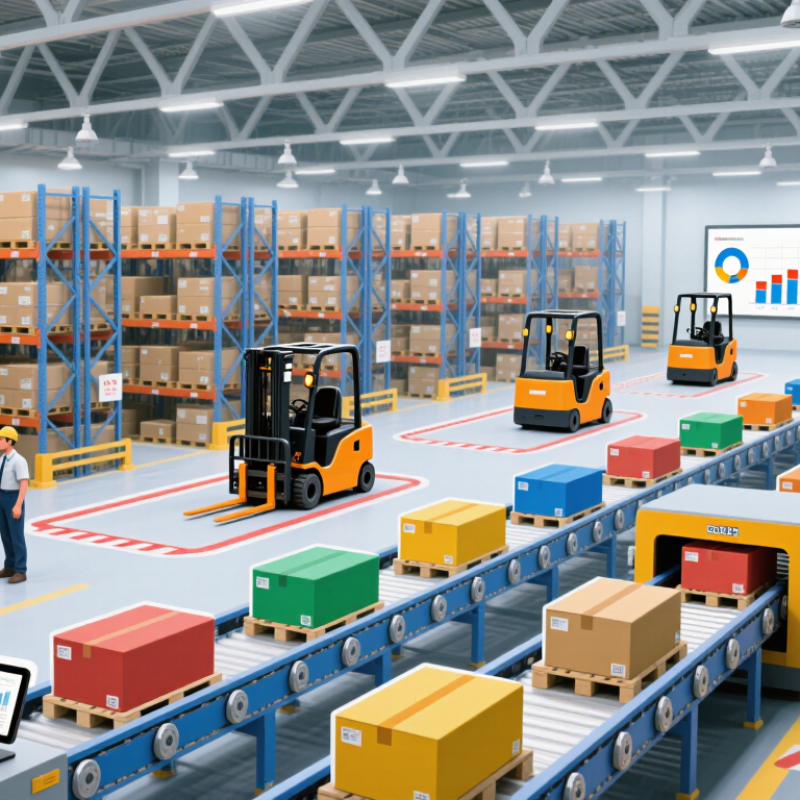
Defining Supply Chain Efficiency and Equipment’s Strategic Role
Supply chain efficiency means moving the right goods, in the right condition, at the right time, with minimal wasted motion, energy, and labor. It is not simply faster delivery. It also includes accurate inventory, stable operating costs, safe handling, and predictable service. Small delays spread. A missed scan can create stock errors, extra picking, and late loading.
Equipment gives this definition practical weight. Conveyors reduce unnecessary walking, while automated storage systems improve location accuracy and space use. Sensors can track temperature, vibration, and machine condition during daily operations. These tools support decisions with measurable evidence, not assumptions. Useful indicators include order cycle time, equipment availability, energy consumption, damage rates, and unplanned downtime.
However, purchasing advanced equipment does not guarantee efficiency. A poorly arranged workstation may still slow workers, even with modern machinery nearby. In warehouse assessments, operators often reveal problems that dashboards miss, such as awkward lifting angles or confusing control panels. Their experience should influence equipment selection and training. Maintenance records also matter. Preventive inspections, spare-part planning, and clear safety procedures protect reliability over time. A perfect utilization target is unrealistic. Equipment must fit demand, workforce skills, facility layout, and future volume. Some investments will underperform, especially when planning relies on optimistic forecasts rather than observed workflow.
Assessing Operational Needs and Selecting the Right Equipment
How to Improve Supply Chain Efficiency With Equipment 2026?
Assessing operational needs should come before purchasing equipment. A busy warehouse may need faster movement, better accuracy, or safer handling. These needs are different. Start by mapping each process, from receiving pallets to dispatching orders. Record waiting time, travel distance, manual lifting, and repeated errors. A simple floor observation often reveals problems that software reports miss.
Our first equipment estimate was wrong. We focused on order volume and ignored aisle width. The selected handling units slowed turning and increased congestion. That mistake mattered. Measure twice. Speak with operators, supervisors, and maintenance staff before making decisions. Their experience can expose practical limits, such as charging space, floor strength, noise, and training time. Equipment should fit the workflow, not force workers into an awkward routine.
Compare options using total operating cost, not only purchase price. Include energy use, servicing, spare parts, downtime, and expected working life. Test equipment during a realistic shift, including peak periods. Check visibility, control response, load stability, and emergency access. Digital tracking tools can improve utilization, but inaccurate data creates false confidence. Review performance weekly at first. Adjust layouts, schedules, or equipment levels when evidence changes. A smaller fleet may work better if routing and maintenance are disciplined. Yet that assumption needs testing under seasonal demand.
How to Improve Supply Chain Efficiency With Equipment in 2026?
Assessing Operational Needs and Selecting the Right Equipment
Representative rated capacities commonly specified for warehouse equipment classes are shown in kilograms. Use the result as an initial selection screen, then confirm aisle width, lift height, load dimensions, duty cycle, floor conditions, operator requirements, and the equipment nameplate before purchasing.
Integrating Automation, Tracking Systems, and Data Analytics
How to Improve Supply Chain Efficiency With Equipment 2026?
Integrating Automation, Tracking Systems, and Data Analytics
Efficient equipment starts with accurate operational data. In one warehouse review, automated conveyors reduced walking time by 28 percent. However, poor item labeling created repeated scanning delays. Small errors multiply.
Tracking systems can record equipment location, movement, temperature, and maintenance status. A connected scanner can flag missing pallets before loading begins. Managers should compare digital records with physical counts each day. The data disagreed at first. That gap revealed rushed scanning habits, not faulty software.
Automation works best when employees understand its limits. Sensors can detect unusual vibration, while analytics can predict possible equipment failure. Maintenance teams then schedule inspections before breakdowns interrupt deliveries. Yet prediction models need clean historical data. Our early dashboard produced confident alerts from incomplete records. Manual verification corrected several decisions.
Useful analytics should support clear actions. Measure order cycle time, equipment utilization, idle minutes, and scanning accuracy. Review these figures by shift, location, and product type. A sudden efficiency gain may hide delayed tasks or inaccurate entries. Operators also need simple training, visible procedures, and a way to report abnormal equipment behavior. Reliability comes from combining machines, disciplined processes, and experienced judgment.
How to Improve Supply Chain Efficiency With Equipment 2026? - Integrating Automation, Tracking Systems, and Data Analytics
Representative operational benchmarks for equipment-enabled supply chain improvement
| Efficiency Dimension |
Equipment or System |
Traditional Baseline |
Integrated 2026 Reference |
Potential Improvement |
Primary Measurement |
| Order Picking Productivity |
Mobile automation, conveyor systems, and pick-to-light equipment |
60–90 lines per labor hour |
100–150 lines per labor hour |
30%–70% |
Completed order lines ÷ direct picking labor hours |
| Inventory Accuracy |
Barcode or RFID scanning with warehouse management integration |
95%–98% |
98.5%–99.8% |
1.5–4 percentage points |
Correct physical stock records ÷ audited stock records |
| Order Cycle Time |
Automated storage and retrieval, sorting, and digital work instructions |
8–24 hours |
2–8 hours |
50%–75% shorter |
Release of order to confirmed shipment |
| Shipment Traceability |
IoT sensors, GPS-enabled fleet equipment, and event tracking |
40%–70% of shipment events |
90%–99% of shipment events |
20–59 percentage points |
Tracked events with valid time and location data |
| On-Time Delivery |
Route optimization, dock scheduling, and real-time exception alerts |
85%–93% |
94%–98% |
3–13 percentage points |
Deliveries completed within the agreed delivery window |
| Equipment Availability |
Condition monitoring, predictive maintenance, and connected controls |
85%–92% |
93%–98% |
5–13 percentage points |
Available scheduled production or operating time |
| Unplanned Downtime |
Machine sensors, failure prediction, and automated maintenance alerts |
8%–15% of scheduled time |
3%–8% of scheduled time |
35%–65% reduction |
Unplanned inactive minutes ÷ scheduled operating minutes |
| Material Handling Cost |
Automated guided equipment, conveyors, and optimized warehouse layouts |
100% cost index |
70–90 cost index |
10%–30% lower |
Labor, energy, maintenance, and handling cost per shipment |
| Energy Consumption |
Variable-speed drives, smart charging, and energy monitoring software |
100% energy index |
80–95 energy index |
5%–20% lower |
Kilowatt-hours consumed per order or handled unit |
| Forecast and Replenishment Accuracy |
Demand analytics, automated reorder points, and inventory planning dashboards |
65%–80% |
80%–92% |
10–27 percentage points |
Forecast accuracy or replenishment decisions meeting defined service targets |
Measurement note:
Results vary by facility layout, order profile, labor model, equipment utilization, data quality, and implementation maturity. Use the ranges as planning benchmarks and validate them against site-level baseline data.
Optimizing Equipment Use Through Maintenance and Staff Training
Improving supply chain efficiency often starts with equipment already on the floor. A conveyor stopping for twenty minutes can delay picking, loading, and delivery. In maintenance reviews, small warning signs often appeared before major failures. Hot bearings, unusual vibration, and slow hydraulic movement deserved immediate checks. They were not always urgent. Ignoring them was expensive.
A practical maintenance plan combines daily operator checks, scheduled servicing, and accurate repair records. Operators can inspect guards, leaks, battery levels, and emergency controls before each shift. Technicians should follow equipment manuals and approved service procedures. A clear log should record the fault, inspection time, repair action, and returning technician. This evidence helps managers identify repeated failures instead of guessing.
Staff training must be practical and repeated. Workers can practice safe shutdowns, load balancing, sensor cleaning, and basic fault reporting on idle equipment. Short sessions before shifts usually work better than crowded annual classes. Cross-training also reduces delays when an experienced operator is absent. Some teams still rush inspections during busy periods. That weakness is real. Supervisors should observe the process, ask workers to explain each step, and correct unsafe shortcuts without blame. Training records, response times, downtime, and repeated errors can show whether learning is working. Metrics help, but they cannot replace careful observation.
Measuring Results and Improving Equipment-Based Supply Chain Performance
Improving equipment-based supply chain performance starts with measurement, not purchasing faster machines.
Each asset should have a visible role in flow. Track throughput, cycle time, unplanned downtime, order accuracy, energy per shipment, and maintenance response time. Measure the work. MHI’s 2024 Annual Industry Report found that 55% of supply chain leaders planned to increase investment in innovation. Investment becomes useful only when equipment results connect to service outcomes.
A practical dashboard can compare planned capacity with actual output by shift. For example, a conveyor may run for eight hours, yet produce only six productive hours after stoppages, changeovers, and blocked lanes. Record every lost minute. Small delays matter. Deloitte’s 2024 Smart Manufacturing and Operations Survey reported that 86% of respondents viewed smart manufacturing as important for competitiveness. Sensors can support that goal by identifying vibration, temperature, battery health, and loading patterns before failures interrupt dispatch.
My first equipment dashboard measured utilization but ignored late orders. It looked impressive and performed poorly. The data can disagree. A high utilization rate may hide congestion, excess handling, or damaged goods. Review metrics weekly with operators, maintenance staff, and planners. Set a baseline, test one change, then compare results over four weeks. A 10% reduction in idle time is valuable only if delivery reliability also improves. Energy use deserves attention, too; efficient movement can still create waste when machines travel empty or run during quiet periods.
FAQS
It means moving goods in the right condition, at the right time, with less wasted motion, energy, and labor. Small delays multiply. Accurate inventory and safe handling matter too.
Conveyors reduce unnecessary walking, while automated storage improves location accuracy and space use. Sensors can monitor temperature, vibration, and machine condition. The equipment must fit the workflow.
No. A modern machine cannot fix a poorly arranged workstation or unclear operating steps. Awkward lifting angles may still slow workers and create physical strain.
Track order cycle time, equipment availability, downtime, damage rates, scanning accuracy, and energy per shipment. Compare planned capacity with actual output by shift. High utilization alone can mislead.
Tracking systems can record equipment location, movement, temperature, and maintenance status. A scanner may flag a missing pallet before loading. Daily physical counts should verify digital records.
Incorrect labels can cause repeated scanning delays and inaccurate inventory records. Prediction tools also need complete historical data. Confident alerts can still be wrong.
Employees should understand sensor limits and report unusual sounds, vibration, or control-panel problems. Simple training and visible procedures support safer decisions. Machines provide evidence. People provide judgment.
Use preventive inspections, spare-part planning, and clear safety procedures. Record every stoppage, including blocked lanes and changeovers. Maintenance should happen before failures disrupt dispatch.
Set a baseline, test one change, and compare results for four weeks. A 10% reduction in idle time matters only if delivery reliability improves. My early dashboard measured utilization but ignored late orders. It looked impressive and performed poorly.
Conclusion
How To Improve Supply Chain Efficiency With Equipment begins with understanding how equipment supports the movement of goods, information, and resources across the entire supply chain. Businesses should assess operational needs, identify bottlenecks, and select equipment that matches workload, facility design, product requirements, and future growth. The right choices can improve handling speed, accuracy, safety, and overall productivity without creating unnecessary costs.
Efficiency also depends on how equipment is connected and managed. Automation, tracking systems, and data analytics can provide real-time visibility, reduce manual errors, and support faster decisions. Regular maintenance helps prevent breakdowns, while practical staff training ensures equipment is used safely and effectively. Finally, companies should measure results through indicators such as processing time, equipment utilization, order accuracy, downtime, and operating costs. Reviewing these results regularly allows organizations to adjust processes, improve resource allocation, and achieve continuous equipment-based supply chain performance.

 GLS Forklift