7 Tips on the Latest Forklift Technology Trends

Time:2026-10-31 Author:Henry
0%

Forklifts are changing in practical, visible ways: quieter electric power, onboard cameras, fleet dashboards, and machines that can follow set routes without a driver. For warehouse managers, the question is not simply which technology is newest. It is which change improves safety, uptime, or operating cost in a real facility. What Are The Latest Trends In Forklift Technology is therefore a question about useful results, not gadgetry.

Industry data points to growing interest in automation. MHI’s 2024 Annual Industry Report found that 55% of surveyed supply-chain professionals planned to invest in robotics and automation. The report covers supply chains broadly, not forklifts alone, so its findings should be treated as context rather than proof of forklift adoption. Still, the direction is hard to ignore. Sensors, connected fleet software, and automated material movement are becoming more relevant as warehouses seek better visibility and productivity.

This guide explores seven trends, from lithium-ion batteries and telematics to autonomous forklifts and advanced safety systems. Consider a busy loading area: a proximity alert may help prevent a collision, while charging data can reveal why a truck is idle at shift change. Small details matter. Technology can help, but it cannot fix poor workflows by itself. And not every warehouse needs every feature. The right choice depends on task mix, floor conditions, operator training, and maintenance support. That judgment takes experience, and sometimes the data is less tidy than a sales brochure suggests.
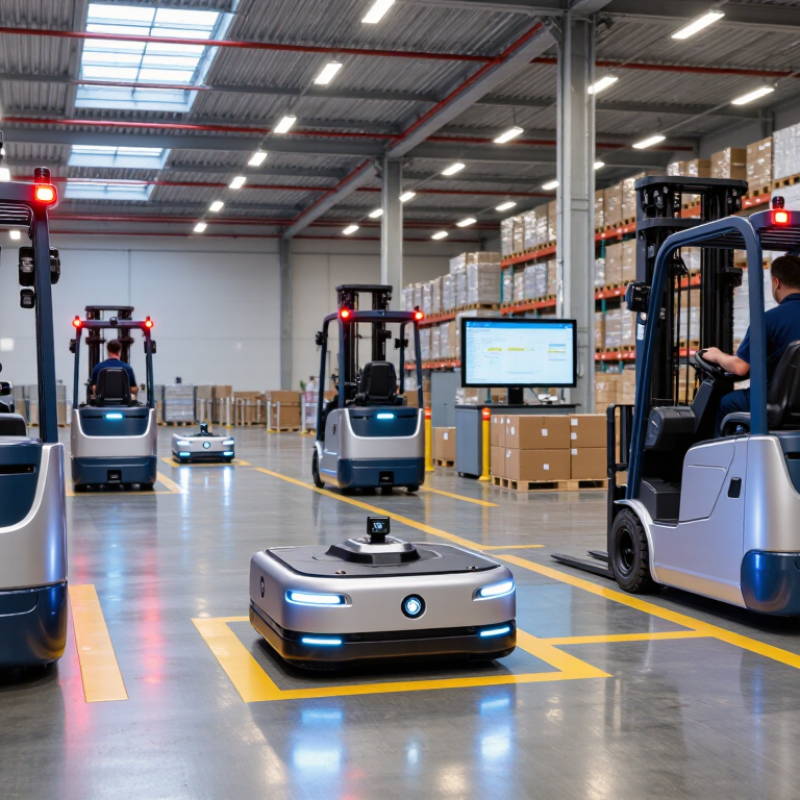
7 Tips on the Latest Forklift Technology Trends

Understanding the Shift Toward Electric Forklifts

Understanding the Shift Toward Electric Forklifts

Electric forklifts are becoming a practical choice for indoor operations, not just a sustainability statement. They produce no tailpipe emissions on site and usually run more quietly than combustion-powered models. That matters in enclosed warehouses, where exhaust and noise affect daily work. The change is not automatic. A truck that performs well on a short shift may struggle with continuous, heavy use.

Battery choice, charging access, and duty cycle need to be considered together. Lithium-ion batteries can support opportunity charging during breaks, while lead-acid systems often need longer charging and cooling periods. Check whether chargers fit the site’s electrical capacity, and test performance in cold storage or on ramps. MHI’s 2024 Annual Industry Report found that 55% of surveyed supply-chain leaders planned to increase technology investment. The figure is not forklift-specific, but it signals growing interest in operational upgrades. One easy mistake is comparing purchase prices alone. Energy, maintenance, battery replacement, and downtime shape the real cost. Still, cleaner equipment does not automatically mean low-carbon operation; electricity sources matter, too. A site assessment can reveal details that a product sheet misses.

7 Tips on the Latest Forklift Technology Trends: Understanding the Shift Toward Electric Forklifts

Electric forklifts use different nominal battery-voltage systems depending on truck type and application. The chart shows common system voltage options, not market share or a performance ranking.

Voltage options vary by forklift model and duty cycle. Check the equipment specifications when comparing charging infrastructure or battery systems.

Exploring Automation and Autonomous Forklift Systems

Automation is changing forklift work from constant manual driving to coordinated material movement. Autonomous forklifts use sensors, mapped routes, and fleet software to move pallets between defined points. Some systems follow fixed paths, while more flexible models adjust routes around obstacles. That matters.

A practical deployment starts with a site survey. Doorways, floor joints, reflective wrap, and changing pallet locations can affect navigation. Safety scanners help detect people and objects, but they do not replace clear traffic rules or trained staff. Workers need to know where vehicles may stop, how to report a blocked route, and when manual control is appropriate.

The strongest results often come from a limited pilot in a repeatable workflow, such as moving pallets from a staging lane to a production area. Track completed trips, delays, near-misses, and time spent waiting—not just distance traveled. Then compare the results with the original process. Integration with warehouse software can reduce dispatch confusion, though inaccurate inventory data may simply move errors faster. Not always. A tidy digital route can still meet a crooked pallet or a busy aisle, so teams should review exceptions regularly. The technology is capable, but site conditions are rarely as neat as the first map.

7 Tips on the Latest Forklift Technology Trends - Exploring Automation and Autonomous Forklift Systems

Technology Trend What It Does Best-Fit Applications Key Planning Consideration Practical Tip
1. Autonomous forklifts and automated guided vehicles Move loads along programmed routes or within mapped operating areas, using onboard sensors and control systems to navigate and respond to obstacles. Repetitive, predictable transport between defined points, such as production lines, staging areas, and storage zones. Routes, loads, floor conditions, traffic, and hand-off points must be assessed for the specific site. Start with a repeatable material-flow task and run a site survey before selecting equipment or defining routes.
2. Flexible navigation and mapping Uses technologies such as laser scanners, cameras, or other sensors to locate the vehicle and navigate its operating area. Some systems can adapt routes when conditions change. Facilities where layouts or travel paths change more often than fixed-route automation can easily accommodate. Navigation performance depends on the vehicle’s sensing method, the environment, and the quality of the map or localization setup. Check how the system handles temporary obstacles, changed layouts, reflective surfaces, and restricted areas.
3. Integrated safety sensing Combines safety-rated sensors and control functions to detect people or obstacles and initiate an appropriate response, such as slowing or stopping. Automated operations in facilities where vehicles and pedestrians may share working areas. Detection fields and stopping behavior need to suit travel speed, load, visibility, and site conditions. Include risk assessment, safety validation, clear pedestrian routes, and procedures for testing safety functions.
4. Fleet management and traffic coordination Coordinates multiple vehicles by assigning missions and managing route access, intersections, charging, or task priorities. Operations with several automated vehicles or multiple transport tasks competing for shared routes. Fleet software may need to exchange task and status information with warehouse or production systems. Map bottlenecks and define how the fleet should behave when routes are blocked or systems lose connectivity.
5. Human-aware mixed-traffic operation Supports automated vehicles operating around people and manually driven equipment through sensing, defined traffic rules, and controlled hand-offs. Sites transitioning gradually from manual material handling to automation. Technology alone does not replace workplace traffic planning, operator training, or pedestrian procedures. Separate traffic where practical, mark crossings clearly, and explain vehicle behavior to everyone working nearby.
6. Battery monitoring and opportunity charging Tracks battery status and can schedule charging during suitable pauses; charging options depend on the vehicle and battery system. Multi-shift operations or processes where planned charging windows can be built into the workflow. Charging time, battery chemistry, charger compatibility, ventilation, and electrical capacity vary by equipment and site. Compare the complete duty cycle and charging plan rather than relying on battery capacity alone.
7. Telematics and performance analytics Collects operational information such as vehicle location, utilization, fault events, and battery status, depending on the system. Fleets seeking better visibility into utilization, recurring interruptions, and maintenance needs. Data quality, connectivity, access controls, and integration requirements should be reviewed before rollout. Choose a small set of useful measures—such as completed missions, downtime, and recurring fault events—and review them regularly.

Safety and standards note: Automated industrial truck systems require site-specific risk assessment and validation. ISO 3691-4 addresses safety requirements and verification for driverless industrial trucks and their systems; applicable regulations and standards depend on the location and application.

Using Connected Sensors and Fleet Management Tools

Connected sensors can make a forklift’s daily work easier to understand. They can record operating hours, battery condition, impact events, and location within a facility. A fleet manager might notice that one truck repeatedly waits near a charging area, while another handles most of the long-distance trips. Those details can guide maintenance schedules and help balance assignments. Small clues matter.

Fleet management tools bring this information into one view, so supervisors can compare utilization and spot recurring issues. For example, repeated impact alerts near a narrow aisle may point to a layout problem, not just operator behavior. Sensor readings should still be checked against inspections and operator feedback; a warning can be inaccurate or miss context. Data is not a substitute for judgment.

Before adding more sensors, decide what question each one should answer. Keep devices calibrated, train staff to interpret alerts, and review the dashboard regularly. Too many notifications can become background noise. A basic weekly review of downtime, battery use, and incident patterns may be more useful than a crowded screen. The technology works best when it supports practical decisions, and teams should revisit whether those decisions are actually improving safety and equipment availability.

Applying AI and Data Analytics to Daily Operations

AI and data analytics can turn forklift records into practical decisions. A dashboard should answer clear questions: Which truck needs inspection? Where do queues form? When does battery use peak? Connect telematics with maintenance, location, and shift data, then review patterns with operators. Their observations can reveal causes that sensors miss, such as a blocked aisle or a frequently moved load.

MHI’s 2024 Annual Industry Report found that 55% of respondents planned to increase investment in supply-chain technology and innovation. That signals growing interest, not guaranteed returns. Tip: Start with one measurable problem, such as reducing idle time. Compare similar shifts before and after a change. Check the data quality, too; a misplaced sensor can make a tidy chart misleading.

Track a few indicators consistently: idle minutes, near-miss reports, service delays, and travel distance per task. Set alerts for unusual patterns, but let trained staff verify them before changing routes or maintenance schedules. Start small. Then verify. Analytics can support safer, smoother work, but it cannot explain every exception. A messy first month is normal; document what the system misses, and refine the process with the people driving it.

Improving Safety Through Smart Forklift Technology

Smart forklift technology can reduce risk, but only when operators trust and understand its alerts.

OSHA’s Powered Industrial Trucks guidance estimates that forklifts cause about 85 worker deaths and 34,900 serious injuries annually in the United States. Those figures make pedestrian detection, speed controls, and seat-belt reminders more than convenient upgrades. They are practical layers of protection.

A pedestrian sensor can warn when someone steps behind a reversing truck. A speed limiter can reduce travel speed near blind corners, while onboard cameras help operators check high or obstructed loads. Telematics can also flag harsh braking or repeated speeding, giving supervisors useful coaching data.

NIOSH’s forklift safety guidance emphasizes separating pedestrian and vehicle traffic where possible. Smart alerts support that practice; they cannot replace clear walkways, regular inspections, or trained operators.

Technology still has limits.

Dust, glare, crowded aisles, and badly placed sensors may trigger false warnings—or miss hazards. Annoying alerts get ignored. That part deserves honest attention. During shift reviews, teams should compare alert logs with near misses and ask operators what the system overlooked.

OSHA’s guidance also stresses training and equipment maintenance, so sensors need routine checks alongside brakes and forks. A safer truck is not automatically a safer workplace. The strongest results come when data leads to specific changes on the warehouse floor.

FAQS

How do autonomous forklifts move pallets?

They use sensors, mapped routes, and fleet software to carry pallets between set locations. Some follow fixed paths; others navigate around obstacles.

What should a site survey check?

Check doorways, floor joints, reflective pallet wrap, and changing load locations. Small details matter.

Do safety scanners replace workplace rules?

No. Scanners detect people and objects, but staff still need clear traffic rules and training. They should know how to report blocked routes.

How should a business test an automated workflow?

Start with a limited pilot, such as moving pallets from a staging lane to production. Start small. Track completed trips, delays, near-misses, and waiting time.

Which operational data is useful?

Monitor idle minutes, service delays, near-miss reports, and travel distance per task. Compare similar shifts before and after changes.

Can analytics identify every cause of a delay?

No. Sensors may miss a blocked aisle or a frequently moved load. Operators can add context that the dashboard lacks.

What can go wrong when systems connect to warehouse software?

Integration may reduce dispatch confusion, but inaccurate inventory data can spread errors faster. A neat route can still meet a crooked pallet.

How should teams respond to unusual data patterns?

Set alerts, then have trained staff verify them before changing routes or maintenance schedules. Review exceptions regularly; the first month may be messy.

Conclusion

What Are The Latest Trends In Forklift Technology? The industry is moving toward electric forklifts that can reduce on-site emissions, operate more quietly, and support efficient indoor material handling. Automation is also advancing, with autonomous forklift systems helping move goods along repeatable routes and assisting with routine warehouse tasks. These developments are changing how facilities plan equipment, workflows, and staffing.

Connected sensors and fleet management tools can provide timely information about equipment use, location, and maintenance needs. AI and data analytics can help teams identify patterns, plan work, and make better-informed operational decisions. Smart safety features, such as alerts and obstacle detection, can support operator awareness and help reduce the risk of accidents. Together, these trends point to more connected, data-informed, and safety-focused forklift operations.

Henry

Henry

Henry is a dedicated marketing professional with a profound expertise in the company's offerings. With years of experience in the industry, he possesses an impressive understanding of the market dynamics and consumer behaviors that drive success. Henry is committed to sharing his insights through......